


82-0.com review
 Analysis by GetAllApps
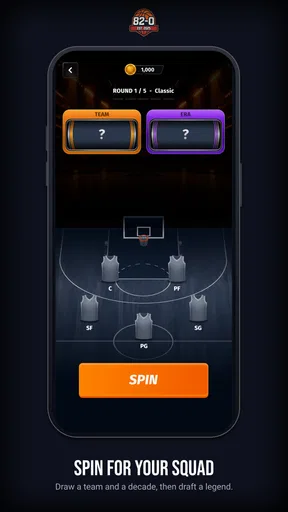
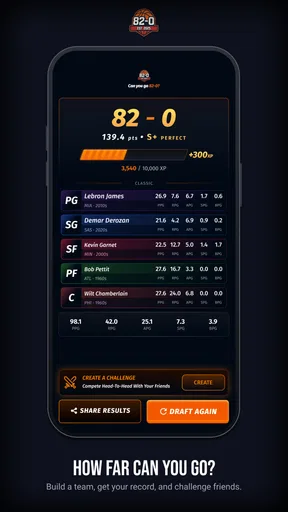
82-0.com is a free sports game built around a familiar basketball fantasy: assemble a lineup capable of surviving an entire season without a loss. I like the idea because it turns roster choices into the main attraction, rather than asking me to manage every possession on the court. That makes it an easy concept to pick up, though the appeal depends on enjoying lineup-building and the pressure of chasing a perfect record.
Building a lineup is the whole draw
Made by Vaulty Studios Inc., this is a focused basketball game for people who enjoy asking “what if?” about a team. The central goal is clear: put together a strong lineup and see how far an unbeaten run can go. I find that more compelling than a generic sports game pitch because an undefeated season gives each decision a natural consequence. A choice that looks clever in isolation matters less if it makes the overall team less dependable.
The game sits in the sports category and is rated Everyone, so its subject is accessible to a broad audience. It is free to install, which makes trying the basic experience a low-commitment decision. The current version is 1.10.5, and the minimum OS requirement is 7.0. Those details are useful if you are checking whether an older device can run it, but they do not tell you how smoothly it will perform on that device.
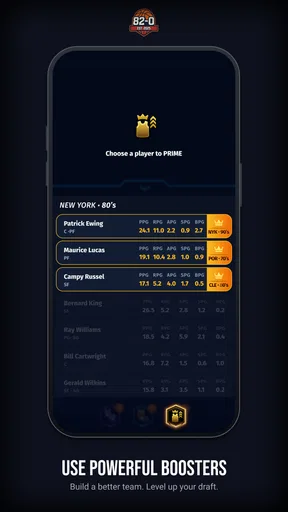
There is a useful distinction between this and a full basketball simulation. If you want to control players through a match, make precise shots, or feel the rhythm of a live game, this premise may not satisfy you. I would approach it as a roster strategy game with a basketball frame: the satisfaction comes from constructing a lineup and testing its prospects, not necessarily from hands-on court action.
How to enjoy the season challenge
The 82-game target suggests a long-horizon mindset. Rather than treating every lineup choice as a quick puzzle with an obvious answer, I would think about consistency: does the roster look balanced enough to keep competing across a full season, or does it lean too heavily on one appealing idea? This is a practical way to make the challenge more interesting, even before you know whether your first build can go all the way.
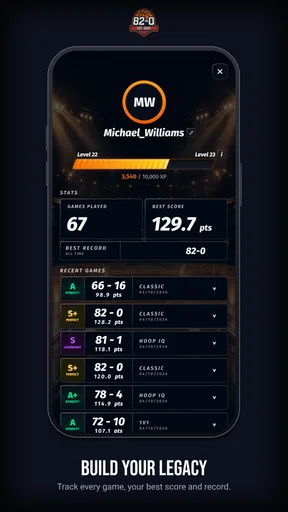
A small but useful habit is to set a personal goal below perfection. You might first aim to build a lineup you can explain, then see how close it gets to an unbeaten season. That keeps a difficult target from turning into an all-or-nothing test. If you do reach a strong run, you can then adjust one part of your approach and compare the result. The value is in learning which choices seem to improve your team, not just restarting until luck goes your way.
It also fits short breaks better than a game that demands a long stretch of active play, provided you enjoy making considered choices. For example, on a commute or while waiting for a friend, you can think through your lineup rather than needing a full match’s worth of uninterrupted attention. I would not assume that every session is brief, however: a season-long goal can invite repeated tinkering, and that can stretch a casual check-in into a more involved hobby.
Pressure, repetition, and the perfect record
The unbeaten-season idea is an effective source of tension because it makes success feel fragile. A perfect record is a clean objective, but it can also make ordinary setbacks feel disproportionately painful. If you prefer games where progress is forgiving and every session brings a new kind of activity, the same clear goal may eventually feel repetitive. This is a game to choose for focus, not for a broad menu of sports experiences.
One way I would keep it fresh is to treat each attempt as a test of a particular roster philosophy. Rather than changing several things at once, make one deliberate adjustment and see whether the team feels more convincing. That gives a failed run some value: you leave with a clearer idea of what you want to try next, instead of reading every loss as proof that the whole approach was wrong. It is a simple strategy, but it helps preserve the fun when the perfect record remains out of reach.
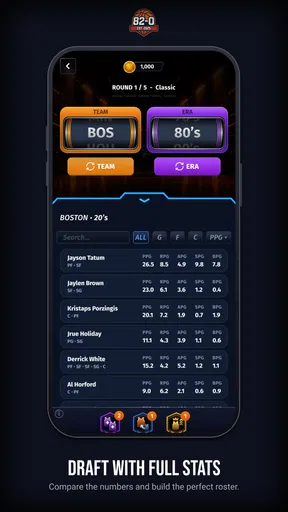
The challenge is also best suited to players who enjoy hypothetical team construction. Basketball fans who follow lineups and enjoy debating which combination works may find the premise naturally engaging. Someone who mainly wants licensed presentation, detailed player statistics, live multiplayer, or realistic match controls should look for a game that explicitly centers those things. I would not choose this solely because it has a basketball theme; the roster challenge needs to be the part that interests you.
Spending and competitive fairness
The game is free, with optional in-app purchases listed from $0.99 to $299.99 per item. That is a very wide range, so I would check the purchase prompt carefully before confirming anything, especially if a child uses the device. The range alone does not explain what each item provides, whether purchases affect roster strength, or whether the game can be enjoyed without spending. I would not treat the existence of purchases as proof that paying is necessary—or that purchases are purely cosmetic.
That uncertainty matters for a game built around assembling a strong lineup. Before spending, I would ask what an item actually gives you and whether it changes the choices available, speeds up progress, or simply adds something optional. If the description is unclear, the sensible move is to skip the purchase rather than assume it is essential. The price range includes a particularly large maximum, so careful confirmation is more important than impulse buying.
On fairness, I can’t responsibly claim that free players compete on equal terms with paying players, or that purchases create an advantage. The purchase facts establish that paid items exist, but not their effect on results. If fair competition is your deciding concern, look for clear in-game explanations before investing time or money. The game may still be enjoyable as a personal lineup challenge, where your own progress is the point, but that is different from knowing that every player has the same competitive tools.
What the audience response can—and cannot—tell you
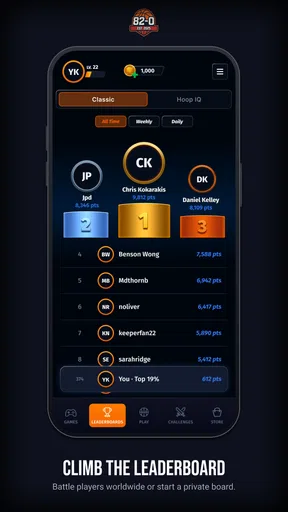
The game has a 4.5 average from around 9,100 ratings, with roughly 737 written reviews, and it has passed 500,000 installs. I take that as a sign that the concept has found an audience, not as a guarantee that every part of the experience will suit me. Ratings can help a new player judge whether a game is established enough to try, while written reviews are more useful when they discuss the particular parts you care about, such as the purchase experience or how satisfying the lineup challenge remains over time.
Because the idea is so specific, I would read feedback with a question in mind: do reviewers enjoy building teams and pursuing an unbeaten run, or are they expecting a conventional basketball match? Those are different standards. A complaint about missing court action might be decisive for a simulation fan but irrelevant to someone who wants roster strategy. Likewise, praise for the central challenge does not answer questions about purchase balance or how much variety a long run offers.
It is rated for Everyone, which is reassuring if you are considering it for a younger player, but an age rating is not a spending safeguard. Since purchases are available, I would use the device’s purchase controls if a child will play. That is ordinary caution rather than a judgment about the game’s content: the age classification and the possibility of paid transactions are separate considerations.
Who should try it—and who should pass
I would recommend 82-0.com to basketball fans who like building hypothetical teams, enjoy a clear long-term goal, and are happy to judge progress by the strength of their lineup choices. It is also a reasonable free experiment for someone who wants a sports-themed strategy diversion without committing to a traditional match simulator. The simple premise makes it easy to understand what you are aiming for, even if achieving it takes patience.
I would skip it if you need direct control of players, a deep coaching sandbox, or confirmed competitive parity between people who spend and people who do not. I would also look elsewhere if repeating a season challenge sounds like work rather than fun. Games centered on live matches are a better fit for action; broader management games are a better fit for someone who wants multiple systems to oversee. Here, the appeal is deliberately narrower: can your lineup sustain the ambition of a perfect season?
For a realistic everyday use, I can imagine opening it while taking a short break, making one considered roster adjustment, and returning later to see whether the run still feels promising. That rhythm suits the premise better than hurriedly changing everything at once. If you tend to spend impulsively when a challenge gets difficult, decide on a personal spending limit before you start—or keep purchases disabled—so the goal remains a game rather than a reason to chase progress with money.
My trust verdict
My view is cautiously positive. The concept is memorable, its sports focus is clear, and the free entry point makes it easy to see whether roster-building appeals to you. I also appreciate that the target is specific enough to give each choice meaning. The trade-off is that the same narrow focus can become repetitive, and the listed purchase range calls for attention rather than blind trust.
Ultimately, I would try it for the lineup puzzle, not on the assumption that it offers a full basketball simulation or a proven pay-free competitive environment. Keep purchases optional until you understand what they do, and judge the game by whether you enjoy planning a team across a season. If that is the kind of basketball thinking you want, this is a promising, focused diversion. If you need more control, variety, or certainty about spending fairness, another sports game will be a better match.
Pros and cons
Pros
- The site is easy to open in a mobile browser.
- A separate app installation may not be required.
- Pages can be accessed from different devices.
- The interface appears designed for quick navigation.
- Users can check the site before deciding to use it.
Cons
- The site may not be available in every region.
- Its features can change without notice.
- A stable internet connection is needed to use it.
- The site's privacy practices should be checked before sharing data.
- Support for mobile browsers may vary by device.


